
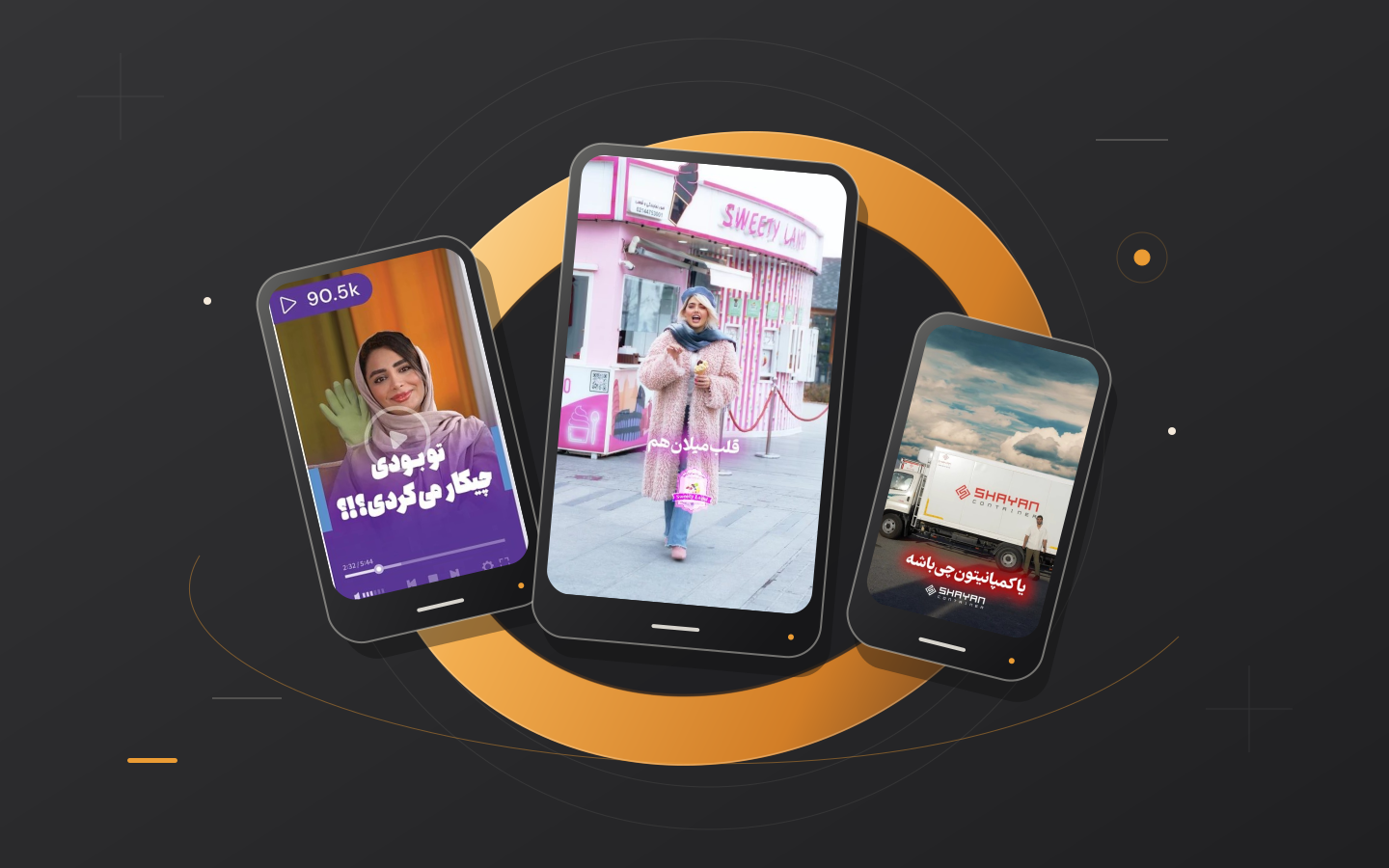
When product features need to become an experience
Customers do not always need more information about a product. Sometimes they need to see the role it plays in real life. A chair makes sense during a working day, a cleaning product during everyday housework, or a snack as part of a gathering with friends. Content grounded in experience can bridge that gap, provided it understands the audience’s problem and has something real to show. An informal style alone is not enough: the story needs to be clear, relevant and honest. For a brand manager, the central question is this: which of the audience’s doubts is this content meant to resolve?
UGC is not the same as every blogger promotion
In its original sense, UGC is content that a user or customer creates about their own experience. In commercial partnerships, independent creators also produce experience-led content using the same visual language. These two forms should be distinguished by how they are commissioned, paid for and disclosed. Influencer marketing focuses more on access to an individual's channels and audience; experience-led content can be valuable to a brand even without being published on the creator's account. Many projects combine both. Before selecting creators, decide whether you need usable content, message distribution or both, then structure the agreement and evaluation criteria accordingly.
Define the goal before the number of creators
“How many videos do we need?” is a production question, not the starting point. First, decide what you want to change: should people understand how to use the product, remember the brand, visit the product page or submit a purchase enquiry? That objective shapes your choice of creator, script, content length and call to action. For an unfamiliar product, showing when and how to use it may matter more than offering a discount. For a familiar one, addressing doubts about buying may take priority. Choose one primary objective and use supporting metrics to serve it.
Creator fit matters more than a single number
Follower count is only part of the picture. Look at the page’s subject matter, tone, storytelling quality, experience with similar products and the nature of audience interactions. A creator should be able to show the product in a natural, relevant setting. Review several recent posts: do they explain an experience, or simply read an advertising script? What do audience questions reveal about their needs? Geographic fit and the practicality of shipping the product also matter. The final choice should bring together several kinds of evidence; page size alone does not guarantee content quality or a successful collaboration.
A detailed brief does not have to compromise a natural voice
A good brief tells a creator what needs to be communicated accurately and clearly, rather than dictating how to deliver every sentence. Define the audience’s problem, the product’s real use, verified features, prohibited claims or content, how the brand should appear and the next action. Within those boundaries, leave room for the creator’s own observations and voice. The product should ideally be genuinely experienced, with its limitations acknowledged. If the creator did not experience a particular result, do not add it to the script. Making every voice sound the same may simplify oversight, but it removes the very variety that makes this kind of content valuable.
Publishing is just one part of the process
Several important steps sit between selecting a creator and publishing: coordinating delivery, confirming receipt, allowing time to try the product, receiving the first draft, checking information, making revisions and preparing the final version. Assign an owner and a deadline to each stage. Before starting, also clarify reposting rights, advertising usage, the usage period and the versions required. Commercial partnerships should be disclosed transparently, and permission to reuse content should never be assumed. A well-organized archive of files, creator names, dates and usage terms helps ensure the content can be used appropriately later on the brand's account, website or relevant campaigns.
Look at views alongside audience behaviour
Views tell you that the content has been seen. To understand its impact, you also need to examine what people do next. Assess the relevance of their questions, saves and shares, visits to the brand’s page and trackable enquiries in light of your objective. If the goal is sales, you also need sales-team data and an understanding of the landing-page experience. Content may attract the right audience while stock availability, pricing or response handling prevents purchases. In your report, distinguish measured figures from interpretations and state the limits of measurement. Attributing all sales—or a decline in sales—to one video without a measurement framework is not a reliable conclusion.
Start small, learn clearly
Start with a few specific hypotheses: which usage scenario or customer hesitation, for example, deserves a closer explanation? Avoid changing the main variables all at once where possible. After publication, don’t simply pick the video with the most views. Look at which story prompted more relevant questions and aligned better with the brand’s goal. Each round should inform the next decision: keep a messaging angle, refine the brief, choose a different creator or improve the landing page. An ongoing programme becomes valuable when each round’s lessons carry into the next.
The SeenDay approach: one coordinated process
In SeenDay’s tailored social media solution, creator selection, briefing, coordinating the product experience, content review, publishing and reporting are all part of one connected process. We begin by understanding the product and the brand’s challenge, then decide on the mix of deliverables and how to execute them. To get started, prepare three things: your main objective for the period, accurate product information and your team’s capacity to respond to the audience. Good content needs to connect to a good brand experience. When that chain is complete, we can discuss delivery quality and the next step with clearer evidence.