
It’s not just about missed calls
A brand invests in attracting an audience, creates content and runs advertising. A customer calls, and a conversation takes place. Yet the opportunity can stall at the next step: the customer’s needs were not fully recorded, no one clearly owns the follow-up, or the next call was forgotten. This gap rarely shows up in call-count reports. To find the root of the problem, we need to look beyond the conversation itself and see what happened afterwards. Was the information recorded? Was an action agreed? And is someone responsible for carrying it out?
How can we understand the cost of a missed opportunity?
No single benchmark can measure this cost for every business. Start by reviewing your own calls and inquiries: how many went unanswered, how many were left without a status and how many needed follow-up? Acquisition costs, team time and the potential value of opportunities are different aspects of the problem; do not add them together and present the total as a confirmed loss. Some callers are not suitable prospects in the first place. The aim is to make a responsible estimate and identify what can be improved. Even without calculating lost revenue, you can show which qualified inquiries were left without a next action.
For sales representatives: pick up the conversation in the right place
When a transcript and summary of the previous call are available, a sales representative can review the subject, needs and earlier agreements before calling again. The customer does not have to start from the beginning every time. Conversation history also helps when responsibility for follow-up changes hands: the new colleague can see what information has been shared and which questions remain unanswered. A summary should be concise and practical: the main need, the product of interest, the barrier to a decision and the next action. Recording information alone is not enough. Easy access and the team’s actual use of it are what help maintain continuity.
For sales managers: assessing quality beyond call volume
Call counts tell you about activity levels, but not necessarily the quality of the conversation. Reviewing calls can reveal whether needs-discovery questions were asked, how the product was explained and whether the call ended with a clear next step. Sales managers can select real examples for training and explain differences in performance with evidence. AI analysis helps review larger volumes of information, but its interpretation of tone, objections or reasons for a lost opportunity must remain open to review. Judgements about a colleague or customer should never rest solely on an automated label.
For CEOs: make the connection between marketing and sales visible
A CEO usually does not want to listen to every call; they want to know where the problem lies and what decision is needed. Are incoming enquiries a good fit for the product? Does the same ambiguity in the advertising keep coming up? Are requests reaching the right person? Patterns in conversations can help refine marketing messages, website information, sales training or the response process. To do this, data must be collected over a defined period using consistent definitions. A useful report does more than list problems: each finding comes with an owner and a proposed action, turning management decisions into delivery that can be tracked.
Recordings, transcripts, summaries and analysis serve different purposes
The audio recording lets you return to the original conversation. A transcript makes topics easier to search and review. A summary brings the key points to the team more quickly. Analysis helps identify patterns and areas that need attention. None fully replaces the others. Names, amounts or technical terms may be transcribed incorrectly, so sensitive details must be open to review. Structured data, such as the contact number, need, status and follow-up owner, should also be kept separate from free-form notes so the team can use it to manage its daily work.
Where does Ravicall fit in?
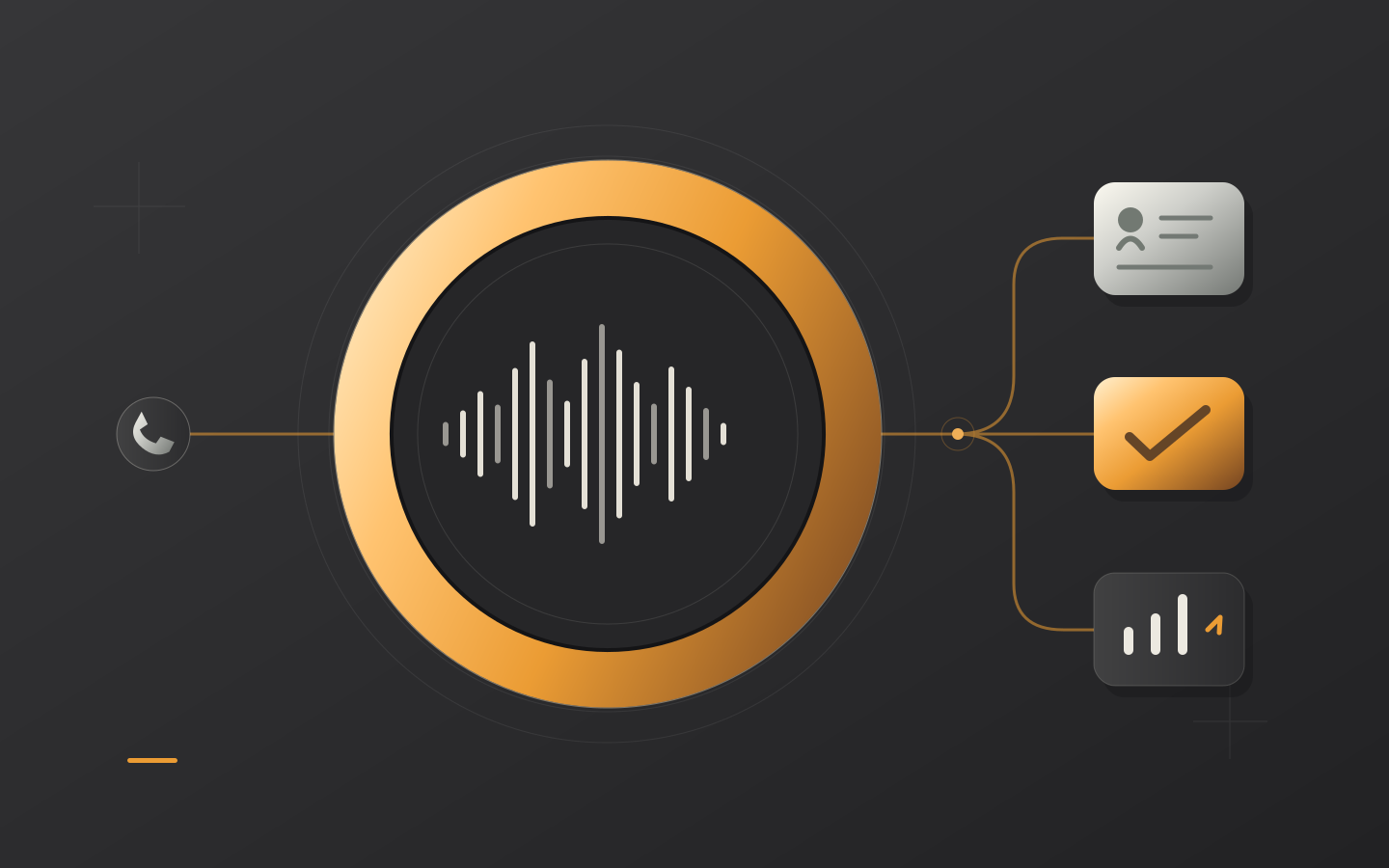
Ravicall brings together three core uses: answering inbound calls with knowledge of the business, making outbound calls for sales and follow-up scenarios, and analysing conversations between sales representatives and customers. The third capability is useful even when a human colleague answers the call. Transcripts, summaries and information that can be followed up turn a conversation into a usable record. Selected information can also be connected to a CRM once the destination and fields have been defined. The value of this approach depends on a clear scenario and team collaboration; a tool alone cannot guarantee sales. Phone-system compatibility and integration details need to be established in a technical review.
Start with a clearly defined workflow
Choose a frequent scenario, such as a request for a product introduction or a follow-up on initial information. Then document the essential questions, information that may be shared, situations requiring a handoff and who owns each action. Product knowledge must be current and verifiable. For recording and using calls, define how people are informed, access levels and retention periods in line with the business’s policies. At the outset, review a sample of calls and summaries with the team to identify factual errors and ambiguities. A phased rollout helps the team understand the process change and brings practical problems to light earlier.
Success means more reliable follow-up
Before starting, record the current situation, then measure the same indicators: response coverage, completeness of contact information, unassigned enquiries, timing of the next action and the quality of summaries. Increased sales may be a desirable outcome, but it also depends on pricing, the product, lead quality and team skills; it should not be inferred simply from having a tool. As a first step, choose a few recent calls and check whether the customer’s need and the next action are clear. If the answer is uncertain, you have found the project’s starting point: turning conversations into usable records and clear responsibility.